
Fanvue AI: What It Is, How It Works, and How Creators Monetize AI Content

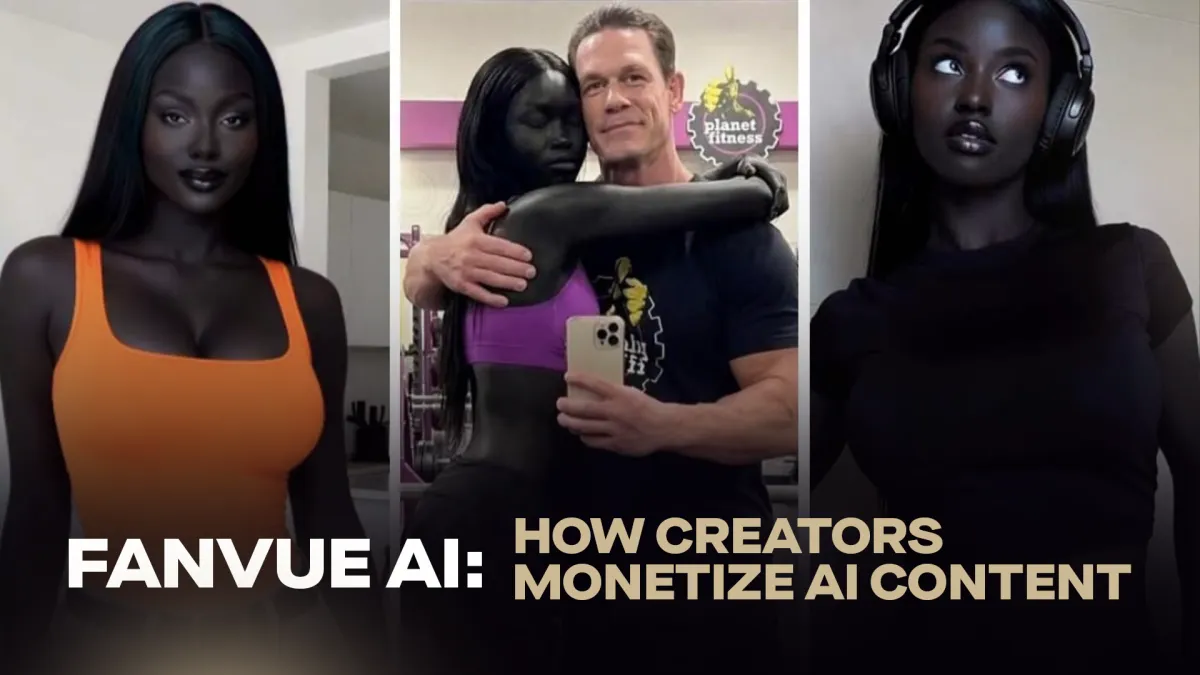
Fan-based platforms are entering a new phase where AI is no longer just a quiet helper in the background — it can be the “creator” itself. While platforms like OnlyFans flirt with automation but keep strict rules around fully synthetic personas, Fanvue went in the opposite direction and openly positioned itself as an AI‑native subscription platform.
Being honest, this is why so many people now search what is Fanvue and specifically what is Fanvue AI. In this article, you’ll see what Fanvue AI is in practice, how Fanvue AI models work, what Fanvue AI content policy actually allows, and how AI creators turn all this into real revenue, often alongside traditional pages, agencies, and tools.
The Rise of AI on Fan Platforms (and Why Fanvue Stands Out)
AI started as a background layer: auto captions, filters, simple scheduling. Now, on fan platforms, it’s moving to the front — as virtual girlfriends, AI OnlyFans models, and fully synthetic “influencers” that never sleep.
Most subscription platforms are cautious here. They worry about trust, deepfakes, minors, and moderation limits. OnlyFans AI guidelines in particular are conservative: running fully AI-generated personas as if they were real humans is heavily restricted or outright rejected in many cases.
Fanvue, nevertheless, made a very different strategic choice. Instead of fighting AI creators, it decided to attract them — from virtual influencers and anonymous brands to agencies that want 24/7 output without a human on camera every day. That’s why Fanvue vs OnlyFans debates now often include one extra dimension: “Which one really supports AI‑first projects instead of only tolerating them?”
To understand how this works, we first need to clarify what Fanvue AI actually means.
What Is Fanvue AI?
When people ask what is Fanvue AI, they usually mix two layers that are closely connected.
AI Tools Built into the Fanvue Platform
Fanvue provides native, AI‑powered features meant to:
- Save time for creators and teams
- Keep engagement running, even when nobody is manually typing
- Support monetization with smarter, data‑aware workflows.
This covers areas such as AI messaging assistance, semi‑automated replies, and analytics‑driven suggestions. It is not only about generating pictures; it’s about making the whole fan interaction loop more efficient.
Support for AI-generated Creators and Fully Virtual Accounts
Fanvue also allows fully AI‑generated models to operate as front‑facing personas:
- AI faces and bodies, generated with external tools
- AI‑assisted chat and even voice replies
- Entire pages themed around a character, not a real person on camera.
These can be adult or non‑adult, as long as Fanvue rules are respected. For some solo creators and OnlyFans agencies, this means they can experiment with an AI‑driven side brand while keeping their human‑first pages separate.
So, Fanvue AI is not just a fancy label for chat automation. It’s an ecosystem that supports AI‑first creator businesses from the ground up.
Fanvue AI Content Policy: What’s Allowed and What Isn’t
Whenever AI and adult content meet, policy matters. That’s where Fanvue AI content policy becomes important for trust. What Fanvue allows:
- Fully AI‑generated images and videos, including NSFW in permitted regions.
- AI‑created personas and characters that are not real individuals.
- AI‑assisted chat, captions, and even voice notes, as long as they stay within guidelines.
- Anonymous creators or teams running AI accounts without revealing their real identity.
At the same time, there are mandatory disclosure rules, since Fanvue expects transparency:
- Creators must clearly disclose that certain pages or posts are AI‑generated.
- This can appear in the bio, captions, or even small visual cues (like watermarks).
- Misleading fans into believing a fully synthetic model is a real person they might “meet one day” is not acceptable.
What’s more, Fanvue’s moderation uses a kind of “reasonable person” logic:
- Would an average reasonable viewer understand what they are seeing?
- Is it free from obvious deception, underage implications, or harmful impersonation?
Plus, there are age, identity, and copyright limits:
- AI models cannot intentionally resemble real people (celebs, ex‑partners, random strangers) unless the creator owns the rights.
- Any AI figure must clearly appear 18+; no “barely legal” ambiguity.
- Generated content must not steal copyrighted looks or be used to harass or impersonate real individuals.
In short, Fanvue AI content policy is permissive but structured. It enables experimentation and innovation, while still trying to protect fans, real people, and the platform’s long‑term reputation.
Fanvue AI Models — How Virtual Creators Actually Work
When you hear Fanvue AI models, think of them as character brands powered by a tech stack rather than as one person with a phone. Behind the scenes, they usually combine:
- Image and video generation tools for faces, bodies, outfits, scenes
- Animation or motion tools to simulate movement
- NLP/chat systems to hold conversations in DMs and comments
- Optional voice synthesis for audio notes in a consistent tone
These models can post on a schedule, reply 24/7, and stay on‑brand without being “tired” or in a bad mood. Costs shift from photoshoots, make‑up, and locations to training prompts, asset creation, and supervision.
What’s more, this architecture makes it easier to:
- Run multiple personas (for different niches or languages)
- Scale content libraries very fast
- Maintain anonymity if you don’t want your real face anywhere online.
Of course, pure AI output doesn’t guarantee money by itself. As with human pages, monetization still depends on how well the content, persona, and conversations are structured for paying fans.
What Features Help Creators Monetize Fanvue AI Content?
Fanvue bakes monetization logic into the AI layer, so it’s not only “pretty pictures” on autopilot, so below are the most prominent platform‑level AI monetization tools:
- AI Messages: an AI extension of the creator or character chats with fans continuously — answering simple questions, flirting within defined boundaries, and nudging toward paywalled content.
- AI Voice Replies: trained synthetic voices send audio notes that sound like a consistent persona, increasing intimacy without manual recording each time.
- Analytics and optimization: AI‑driven insights show which posts, scripts, and offers perform best, helping refine what kind of Fanvue AI content you create next.
- Automatic behavioral notes: the system can store simple behavior patterns (night owl, big spender, reply times), making personalization easier.
All of this reduces the time between a fan discovering a profile and spending money — because they don’t wait hours for a reply or days for new content drops.
Most serious AI creators combine Fanvue’s native features with:
- Third‑party image/video generators for the aesthetic they want
- Conversation models fine‑tuned for their specific character
- Small scripts and tools to manage narrative arcs or long‑running storylines.
From the fan’s viewpoint, the result can feel like following an always‑available influencer — just one that lives partly in prompts and servers instead of a real apartment.
Making Fanvue AI Even More Powerful with OnlyMonster
Fanvue handles AI‑native creation and engagement very well. Nevertheless, as soon as you have serious volume — multiple AI personas, hybrid pages, or mixed human + AI setups — a new challenge appears: operational control.
That’s where tools like OnlyMonster become an essential add-on to the in-built Fanvue functionality. While Fanvue focuses on hosting, discovery, and AI features, OnlyMonster focuses on:
- Management and prioritization: making sure high‑value fans are seen first, even across different platforms or personas.
- Organizing conversations and media: storing scripts, content sets, and notes in a way teams can reuse and scale.
- Adding structure to chaos: designing workflows, not just individual replies — something very important for OnlyFans agencies that start adding Fanvue AI projects to their portfolio.
For creators running serious AI‑driven accounts, the limiting factor stops being content generation. It becomes: “Can we track who spends what, which conversation paths convert, and where to focus our time?” That’s exactly the type of operational brain OnlyMonster is designed to provide.
Conclusion
Fanvue AI marks a real shift in how fan‑based monetization works. Instead of treating AI‑generated creators as a problem to push away, Fanvue leans into them — with clear Fanvue AI content rules, support for fully virtual personas, and platform‑level tools that let AI handle large parts of engagement.
Is Fanue legit for this kind of work? Yes — as long as you respect disclosure, stay within content rules, and build real value, not just spam. That’s why for creators and agencies exploring this space, AI is no longer just a hack; it’s becoming a full business model. And with management layers like OnlyMonster on top, Fanvue AI models can move from fun experiments to scalable, well‑run digital brands — whether you are extending a human page, adding a virtual twin, or building a completely synthetic universe from scratch.
 Join Us on Telegram!